
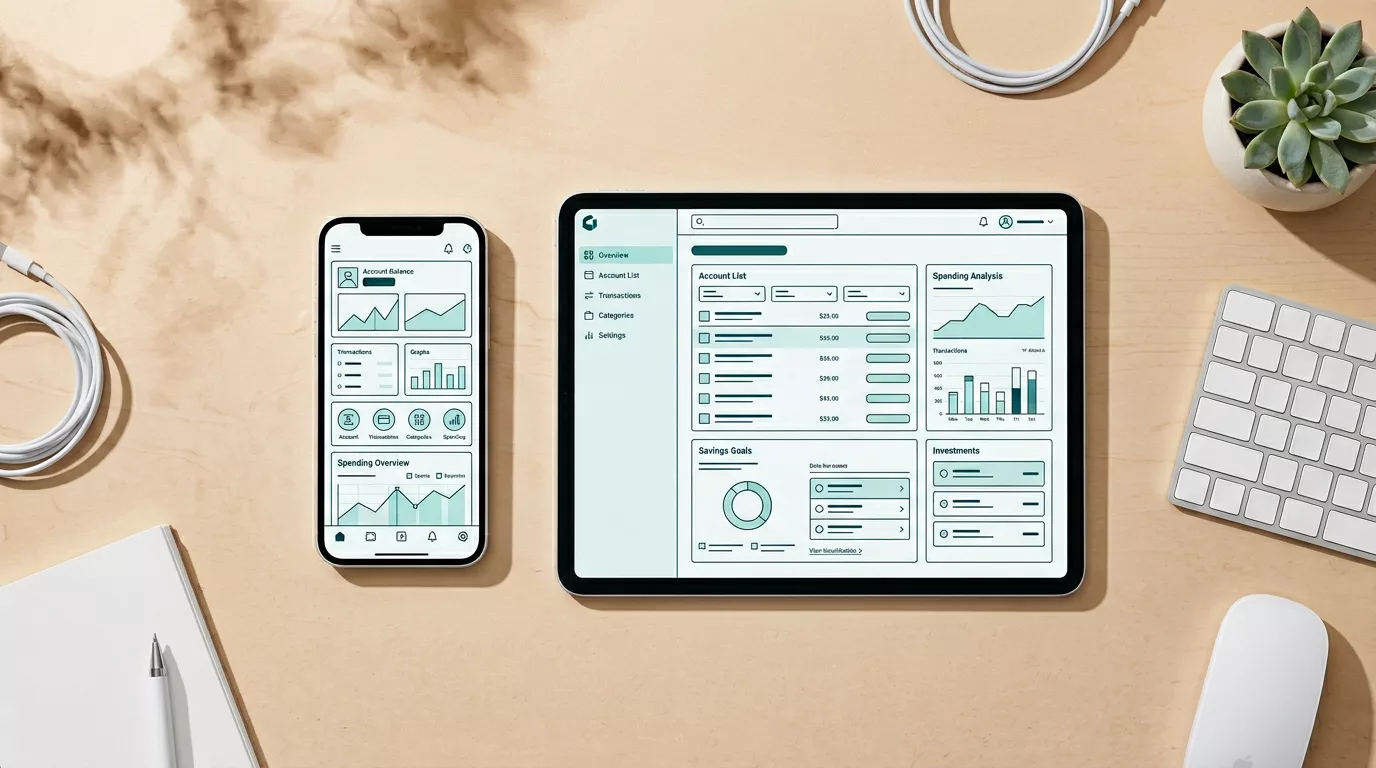
Tribal lending transformed from reservation storefronts in 2005 to AI-driven platforms processing applications in under 60 seconds and funding accounts within one business day. Five core technologies — automated underwriting, electronic ID verification, same-day ACH, mobile-first platforms, and cloud infrastructure — now power an industry serving over 20 million underbanked Americans.
A Brief History: From Storefronts to Smartphones
Tribal lending as a formal consumer credit product traces its roots to reservation-based storefronts in the late 1990s and early 2000s. These operations served a real need — the FDIC household banking survey consistently shows that millions of American households remain unbanked or underbanked, particularly in rural communities and among populations of color — but their geographic footprint was inherently small. A borrower in rural Iowa or suburban Georgia had no meaningful way to access these products.
The internet changed the equation. As broadband penetration expanded through the mid-2000s, forward-thinking tribal enterprises launched basic web portals that allowed borrowers anywhere in the country to submit applications online. Loan processing still relied heavily on manual review, but the geographic barrier had been shattered. By 2010, dozens of tribal lending operations had shifted significant volume to online channels.
The smartphone decade (2010s) brought the next leap. Mobile-first design became a competitive necessity, and by the early 2020s, industry data indicated that more than 70% of tribal loan applications were being submitted from mobile devices. The borrower expectation had fundamentally shifted: the entire process — from application to funding — needed to work flawlessly on a 5-inch screen.
Today, in 2026, the industry has entered what analysts call its AI/API-driven phase. Machine learning models, real-time data integrations, and cloud-native infrastructure have turned what was once a labor-intensive manual process into a largely automated pipeline capable of handling thousands of applications simultaneously. The scale of consumer borrowing driving this demand is evident in the Federal Reserve consumer credit data, which tracks trillions of dollars in outstanding non-mortgage consumer credit.
5 Technologies Powering Modern Tribal Lending
1. AI-Powered Automated Underwriting
Traditional credit decisions leaned almost entirely on FICO scores — a single three-digit number that excluded millions of credit-invisible Americans. Modern tribal lenders have moved far beyond this. Today’s automated underwriting systems ingest 200 or more data points per application, including bank transaction patterns, income regularity, employment tenure signals, and behavioral indicators that predict repayment likelihood more accurately than any single score.
The practical result is that borrowers who were historically declined by traditional institutions — not because they are irresponsible, but because they have thin credit files — can now receive fair consideration based on their actual financial behavior. The NY Fed household debt report documents how non-traditional borrowers carry debt across multiple product types, underscoring the real demand this AI-driven access addresses. The machine does not care whether the applicant has a 30-year credit history. It evaluates what the data actually shows about their financial patterns.
2. Electronic Identity Verification
Fraud prevention and regulatory compliance require lenders to verify that applicants are who they say they are. Services like Socure, Plaid Identity, and similar platforms cross-reference submitted information against government databases, financial institution records, and behavioral biometrics in real time. What once required faxing copies of a driver’s license now happens invisibly in the background during the few seconds an applicant is reading the loan terms.
3. ACH and Instant Bank Transfer for Same-Day Funding
Approval is only half the equation — borrowers in urgent situations need funds quickly. Modern tribal lenders leverage the ACH network and, increasingly, real-time payment rails to move approved funds directly to a borrower’s checking account. Same-day funding, once a premium feature, has become a standard expectation for competitive lenders. For a borrower facing a medical bill due today, this capability is the difference between a useful financial product and an irrelevant one.
4. Mobile-First Platforms
With over 70% of applications now initiated on mobile devices, the best tribal lending platforms have been redesigned from the ground up for small-screen usability. Progressive disclosure — showing only the information a borrower needs at each step — reduces cognitive load and application abandonment. Touch-optimized form fields, camera-based document capture, and biometric authentication (Face ID, fingerprint) have made the mobile application experience faster and less error-prone than its desktop predecessor.
5. Cloud Infrastructure and Elastic Scaling
Behind the consumer-facing interface is a technical architecture that would have been cost-prohibitive for small tribal enterprises even a decade ago. Cloud platforms allow lending operations to scale computing resources up and down based on demand — handling a surge of applications on a Monday morning without the expense of owning servers sized for peak load. This has democratized sophisticated lending technology, enabling smaller tribal operations to compete on capability with much larger institutions.
How Borrowers Benefit
The technology stack described above translates to concrete, tangible improvements for borrowers. For those evaluating cost, the Bankrate personal loan benchmarks offer a useful baseline for comparing tribal loan rates against mainstream alternatives before applying:
- check_circle 24/7 availability. Emergencies do not observe business hours. An online tribal lending platform accepts applications at 2 a.m. on a Sunday as readily as at 10 a.m. on a Tuesday.
- check_circle Faster decisions. Automated underwriting compresses what was once a 24–48 hour review into seconds, removing the anxiety of waiting to find out whether an application was approved.
- check_circle Rural and underserved access. A borrower in a rural county with no nearby bank branch has exactly the same access as a borrower in a major metropolitan area — as long as they have a smartphone and a data connection.
- check_circle Less documentation burden. Bank account linking via services like Plaid means many lenders no longer require borrowers to gather and upload pay stubs, bank statements, or tax forms. The system reads what it needs directly, with the borrower’s consent.
Benefits to Tribal Communities
The technology transformation has not only benefited borrowers. For the tribal nations that own and operate these lending enterprises, the shift to digital has been economically significant. Scalable online operations generate revenue that funds essential tribal services — healthcare, education, housing, and infrastructure — without being constrained by the geographic limits of a physical storefront.
Digital lending operations also create skilled employment within tribal communities: software developers, data analysts, compliance professionals, and customer service specialists. Some tribal lending enterprises have partnered with programs through the CDFI Fund community lenders initiative to access mission-aligned capital that supports both economic development and more competitive borrower rates. As tribes have built or acquired technology capabilities, they have reduced dependence on outside vendors and gained greater control over their economic futures.
Security in the Digital Lending Environment
The convenience of online lending is only valuable if the underlying systems are trustworthy. If you encounter marketing or referral claims about tribal lenders that seem misleading, the FTC endorsement guidelines explain what disclosures legitimate lenders and their affiliates are required to make. Reputable tribal lenders employ layered security measures that parallel what you would expect from a mainstream bank:
- check_circle SSL/TLS encryption protects all data in transit between your browser and the lender’s servers.
- check_circle Bank-level encryption at rest ensures that stored personal and financial information cannot be read even if a database were compromised.
- check_circle Two-factor authentication for account access adds a second layer of protection beyond a password.
- check_circle Real-time fraud detection models flag suspicious application patterns before funds are disbursed, protecting both borrowers and lenders from identity theft.
The Marketplace Model: How Comparison Platforms Fit In
Sites like this one operate as loan marketplaces — an increasingly important layer in the lending technology stack. Rather than acting as a direct lender, a marketplace platform collects a borrower’s basic information and routes it simultaneously to a network of tribal and other lenders who have pre-agreed to participate. Borrowers receive multiple offers in a single session, enabling side-by-side comparison of rates, terms, and repayment structures.
From a technology standpoint, this requires sophisticated API integrations between the marketplace platform and each participating lender's underwriting system. A single form submission can trigger real-time decisioning across dozens of lenders simultaneously, returning results in seconds. For borrowers, this means maximum optionality with minimum effort — a single application rather than a dozen separate ones.
“Technology has done more to democratize access to short-term credit in the past decade than any policy change in the previous fifty years. The challenge now is ensuring that access reaches everyone — including the populations least served by digital infrastructure.”
— Industry commentary on financial inclusion and digital credit access
Emerging 2026 Trends
The pace of innovation shows no sign of slowing. Several trends are reshaping tribal lending right now:
- check_circle Open banking integration is deepening lenders’ ability to assess cash flow with borrower consent, moving underwriting even further from static credit scores toward live financial data.
- check_circle Embedded finance is placing lending offers within non-financial apps — bill-payment platforms, gig-economy tools, and utility services — reaching borrowers at the exact moment they need credit.
- check_circle Biometric verification using facial recognition and liveness detection is replacing knowledge-based authentication, reducing fraud and streamlining the application experience.
- check_circle Blockchain loan records are being piloted by a small number of tribal lenders as an immutable, borrower-controlled way to document repayment history — potentially building portable credit records independent of traditional bureaus.
Credit unions are simultaneously expanding short-term lending options through the NCUA Payday Alternative Loans program, offering a federally regulated alternative for borrowers who qualify for credit union membership. See our guide on future tribal lending trends for a deeper look at where these shifts are heading.
The One Challenge Technology Has Not Solved
For all its transformative power, digital lending infrastructure has an Achilles’ heel: it assumes connectivity. Approximately 21 million Americans — disproportionately in rural areas and on tribal lands themselves — lack reliable broadband access. Many more lack the smartphone or digital literacy to navigate online application processes comfortably. The very populations most likely to need emergency credit are sometimes the least equipped to access it through digital channels.
Progressive tribal lenders are aware of this gap. Members of the NAFSA member directory are among those maintaining hybrid models — keeping phone-based application pathways alongside their digital platforms, and partnering with community organizations to provide digital access and literacy support. Solving the digital divide is not a technology problem; it is an infrastructure and equity problem that the industry alone cannot fix. But the best actors in this space are at least acknowledging it. Borrowers who complete their loans successfully can check their credit reports at AnnualCreditReport.com to confirm whether their tribal lender is reporting on-time payments to any credit bureau.
Experience Modern Tribal Lending
See how today’s technology delivers fast decisions and same-day funding — one simple form, multiple lender options.
The Bottom Line
Technology has made tribal lending genuinely faster, more accessible, and more fraud-resistant than its storefront predecessor. For borrowers, the practical benefits are real: 24/7 access, 60-second decisions, and same-day funding that makes tribal loans viable for actual emergencies. The cost has not changed — APRs still run 200%–600% — but the experience of accessing that expensive credit has improved dramatically.
Before you apply, verify that the lender's tribal affiliation appears on the BIA tribal directory and that the lender provides a full TILA disclosure before signature. If you have a complaint about a digital tribal lender's practices, the CFPB complaint database accepts complaints about non-bank lenders regardless of their tribal status.